Studying, sunshine and exciting times ahead

Lots and lots of studying. That’s what I’ve been up to since Jim Brown taught us fermentation and microbiology a couple of weeks ago. This topic in particular has been the most challenging area for a lot of us in the MBP so far. With a lot of the other topics I have found I have been able to follow the story logically and that has helped me remember things. It’s the same for fermentation, if you can follow what’s happening you can logically work your way through it and remember what the steps are and what is important to brewing. The problem is that the steps are sometimes extremely complicated biological pathways. This is particularly true for understanding yeast-derived flavor compounds. Fusel alcohols, esters, VDK’s, fatty acids, organic acids, ethanol are all produced by different metabolic pathways related to glycolysis from glucose to pyruvate. So I’ve spent a lot of time over the past week and a half going through these pathways to better understand them. I think it is finally paying off, I’m feeling much more confident about this stuff…I think. We’ll see when I get back the exam we wrote on Monday.

We are also spending a lot of time these days on contaminating organisms – wild yeast and bacteria. Beer is a fairly inhospitable environment as it has low pH, high ethanol content and the α-acids from hops also act as a disinfectant. However there are several organisms that can make a brewers life hell and we need to get to know them, where they hide, when they pop up and how to get rid of them (sometimes not possible…tear down the brewery). I find this to be particularly useful as a brewing student. As the course was described to me, it is not only about making good beer (anyone can do that), it is about knowing how to fix problems when they occur, or better yet, how to prevent them.

We had our final (official) brewery tour of the course last week and this time we hit up Lagunitas in Petaluma California. A brewery known for good times and they showed it to us. We were first treated to a couple of beers in their inviting and rustic tasting room that reminds me of my Grandpa’s basement (lots of things on the wall and lots of old furniture). The tour was focused on packaging so we headed over to their keg line and pretty quickly to the bottling line. When we got to the bottling line we stayed there for the rest of the tour, had free reign and got to check out all of their equipment. The staff were really nice and surprisingly tolerant of us running about. They even pulled a couple of bottles off of the line for us to try an “8 second old” Undercover Shutdown (I encourage you to research how that beer got its name). After the tour we sat in the scorching sun (have I mentioned it’s been summer here for at least a month) and tasted a good variety of their beers.

It’s hard to believe we only have two and a half weeks left of the first phase of the course. Next week the Pope of Foam, Charlie Bamforth is finally back from overseas and he will be teaching us about beer quality and of course, foam. I am definitely glad he will be back because he brings a certain excitement and comic relief to the class. After how intense the last couple of weeks have been in terms of material I think we will all appreciate it.

So I suppose I should mention some exciting things I have planned for the second phase of the course. This next phase is a lot less structured that the first phase, where we basically sit in front of instructors and learn. For the second phase, some students take internships and some choose to stick around for review, microbiology labs and guest speakers. I was unsure of what to do initially but I have decided to take the internship route as I need the experience and I am craving some hands on work in a brewery. I have set up two internships that I am extremely excited about. I will initially be at Steamworks in Vancouver (the Burnaby brewery) the last two weeks in April and then I will head to Victoria for two weeks at Phillips Brewing. I am super thankful to the folks at both Steamworks and Phillips for bringing me on and I hope I can contribute with some old fashioned hard work and motivation.

The week before these internships begin I will be attending the Craft Brewers Conference in Portland Oregon. I am also very excited about this opportunity and hope to meet some experienced brewers who can give me some pointers on being a successful brewer. I was hoping more people from our class would join but I think the cost of the conference is holding people back (It’s a good thing I bought my tickets before I was unemployed). I will write a bit more on what I hope to get out of the conference closer to that time, and once I attend I hope to write a good summary of what I learned.

That’s it for me for now. Tomorrow I’ll be learning about lab analysis on beer and then studying for our upcoming engineering test. We have a long weekend coming up since we don’t have sensory this week. I was planning on studying all weekend, but with the weather forecast at 28°C, I think I will join Judith on a hike at Yosemite National Park instead.
Mid-March update from the MBP

It’s been a while since I’ve written. All I can say is that time is flying by at a pace that is a bit faster than I’d like. I’ve been doing my best at balancing time between class, studying, events, brewing, time with my wife and socializing with the professors and students in the MBP. All of these things are really great (and important) but all of them take time and it’s coming at the expense of sleep and relaxation, which seems to make time in general go by too fast. I’ll try to write this blog when I can but it’s one of the things that is difficult to find the time to do. For now though I’ll try to summarize some of the things we’ve done over the past couple of weeks.

We had Dr. Jim Brown for two days last week and we were taught an incredible amount of information about yeast and fermentation. We were taught about glycolysis and other metabolic pathways that form fusel alcohols, esters and ketones (among many other things) that contribute to the flavor of beer. We went in to detail on a wide variety of yeast strains (many more than S. cerevisiae and S. pastorianus) and contaminating bacteria. We covered cell biology, DNA sequencing, a variety of yeast identification methods and plating yeast bacteria samples and how to isolate and culture different colonies. We were taught about proper cleaning techniques and what can happen when you get an infection in the brew house.  That was a ton of information to take in over two days considering this covers a good chunk of what we will need to know for the second part of the IBD exams. It would have been nice to have spent more time on this stuff but I guess they could only schedule Jim in for these two days (we’ll see him again in a couple of weeks for review). We did get a good set of handouts and I have a ton of notes from those two sessions that I will need to study…starting tomorrow morning, which is fast approaching.

I attended the MBAA winter meeting for the Northern California district last Wednesday that was hosted by Track 7 in Sacaremento. I had a really good time. We got a tour of their new facility (30 barrel system in a massive warehouse), we heard from the UC Davis Master’s degree students on some of the research they were doing. I talked to brewers from all over Nor Cal, and we were treated to many samples of great beer from their breweries. I got to hang out with our profs in a relaxed social setting which was great because they gave me thoughts on how they thought I was doing in the course, advice about internships (more on that to come later) and some pointers on ‘what to know’ for the exams.

We had Jeffers Richardson from Firestone Walker visit us on Friday and treat us to some excellent beer samples from their wild beer program that he heads up. We learned about what oak can bring to beer and, in timely fashion, learned about using wild yeasts and bacteria for producing barrel aged beers. The three samples he brought in (Sucaba, Agrestic and Concecration from his friend Vinnie at Russian River) were so complex and enjoyable I swear I felt some form of euphoria by the last sip. I am incredibly impressed by the programs they have set up and how they produce these beers. By Jeffers’ description, from what I understand, they have about 800 barrels of beer aging at any one time. From those they will ‘get to know’ those of them between 8 and 48 months old. When they go to produce a beer they will have in mind about 100 of the barrels that they might want to draw from to include in a blend that will produce the final beer. They taste the beers one by one, look over past and present notes and blend about 26 of them together, by taste, to get that year’s version of the beer that will go to market. Their wild beer program produces only about 9 batches of beer a year this way. Man, I would die for a job like that, but it would probably take me 20 years to get the sensory skill to be able to do it. The visit from Jeffers was a great reminder of just how important sensory is to being a good brewer. All of the long time pros we’ve met have emphasized that. Even some of the guys who don’t spend too much time brewing these days will spend a lot of time seriously tasting their beer. And the good ones don’t compromise on what’s acceptable.

We also toured the Anheuser Busch facility in Fairfield the other day. Impressively massive brewing vessels. Brewers brewing from a room full of computers.

Tourin’

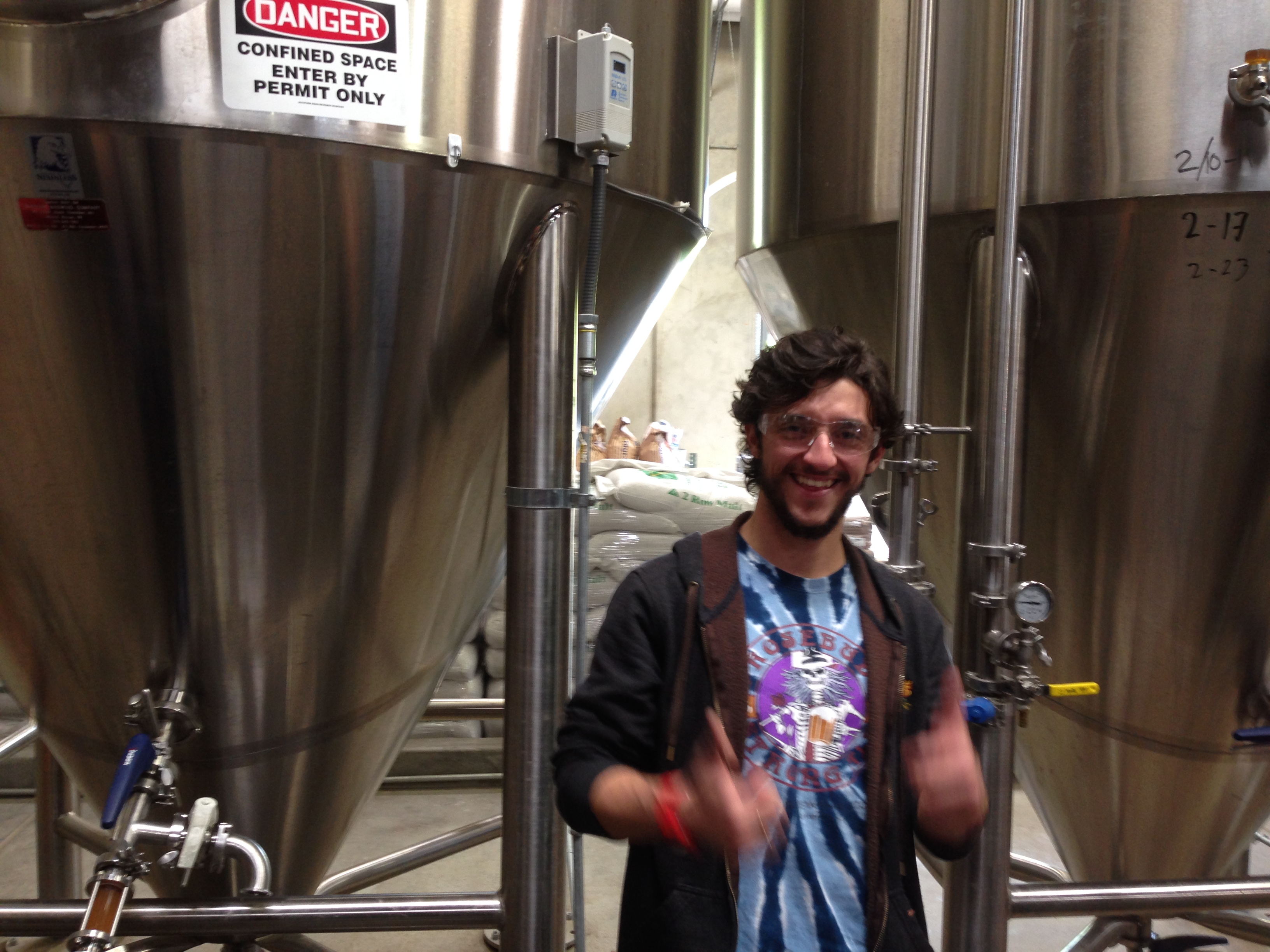
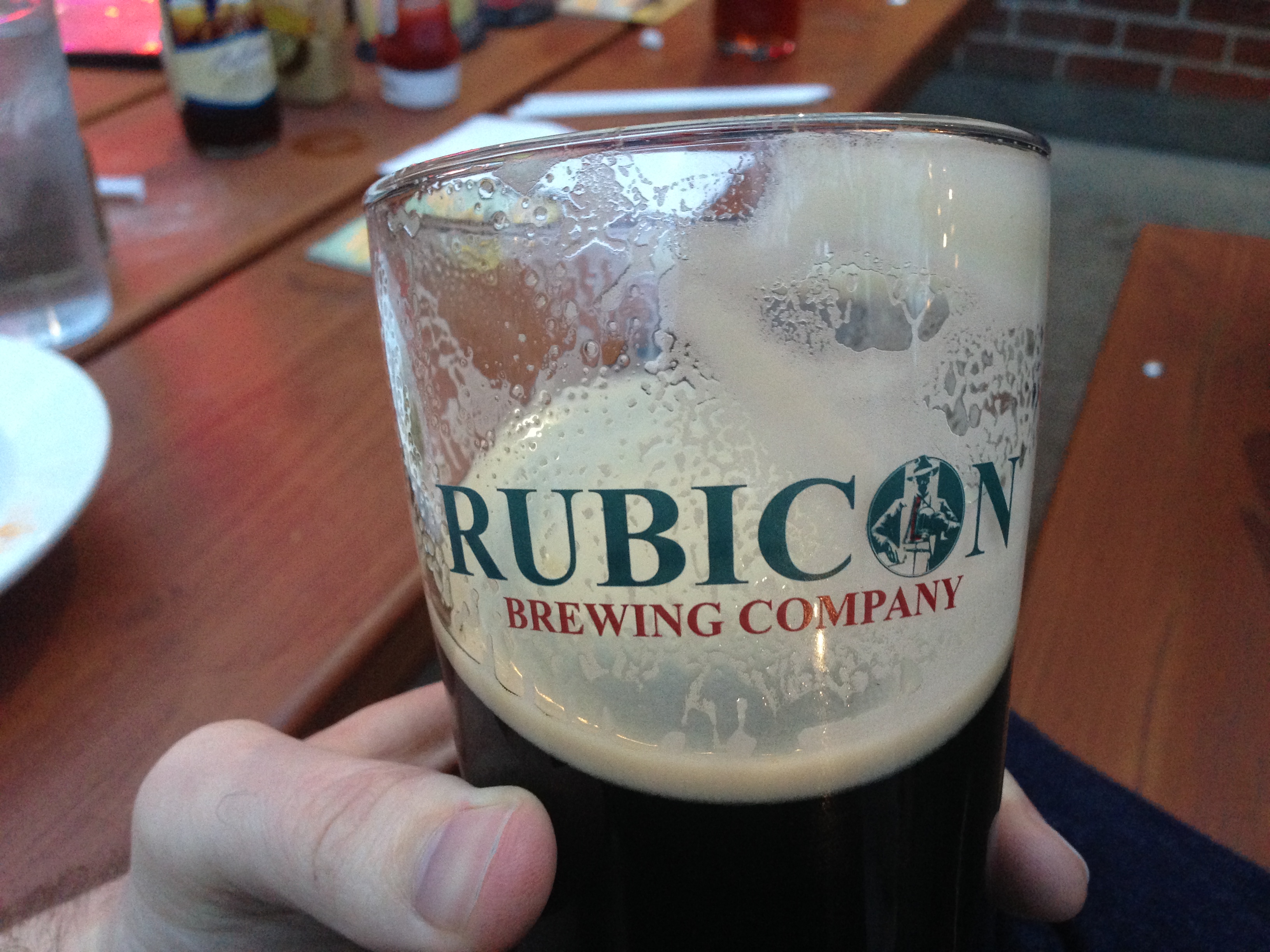
So much to write about since the last time. Most exciting of all was a pair of brewery tours. Monday after class we hit up Rubicon Brewing, first we went to their production facility in West Sacramento where they have an incredibly large warehouse with a new 30 barrel brewhouse and several very large fermenters, a few bright tanks and a couple small bottling lines. Our tour guide was Chris Keeton, a brewer at Rubicon and a classmate in the MBP. They have plans to expand and they definitely have the room to do it in this facility. We spoke for a while with Scott Cramlet, the brewmaster, about his thoughts on what to take away from the course depending on our goals in the industry. Next we travelled to downtown Sacramento to visit the Rubicon brew pub.  This is where the real fun of the evening took place.  We arrived on a day that Rubicon was releasing a few new brews, and Chris had a good deal of creative input in to them and it was nice to see him pumped about the evening.  The place was packed as I’m told it is every night; the crowd included a large number of regulars who are there very regularly.  We chatted with one guy who told us he once went a year and a half straight spending daily quality time at the pub.  It was cool to see Chris in his element as well, the regulars know him well and like to chat about the beer; you could tell he was loving it.

We ducked in to the back to visit the brewery, one that none other than Dr. Michael Lewis designed and installed back in the 80’s. After seeing the West Sac facility, this was a mini version, especially of the fermenters, which were custom made to fit in the 15’ high ceilings. Chris explained how he knows every single piece of equipment and how to treat it to get it to actually work. With such an old brewhouse there are many little quirks that come along with it.  But it was built to last and still kickin.

IMG_6107 IMG_6112

On Wednesday we received the treat of the course that everyone had circled in their calendars, Sierra Nevada brewery tour day! It was described by Dr. Lewis as “the most beautiful brewery on the planet” and it didn’t disappoint.  The place was massive and spotless, but was also done up to look great. The copper plating of their 200 barrel kettle and lauter tun, which is purely aesthetic, was done by 14 German copper smiths that Ken Grossman convinced to come out of retirement and fly half way across the world to complete.  We walked on what I can only describe as a sky walk (complete with Star Trek style automatic doors) and looked over the solar panel covered roofs and hydrogen fuel cells. They are somewhere around 75% energy self-sufficient at one of the largest breweries in the U.S. in an industry that is incredibly energy intensive.  I really like that they strive for this even though it wouldn’t normally make sense for a company to do it (I think the return on investment for the solar panels is something like 7 years, and more for the fuel cells).

IMG_6164

IMG_6198 IMG_6210

The bottling line was a thing of beauty. We’ve sat through 6 weeks of packaging lectures, but after seeing this room I finally have an appreciation for how complicated and delicate running an efficient bottling line is, and it is way more interesting when you can actually see it working than when you are reading about it or looking at a power point slide. It was nice to know what parts to look for though. The room was filled with super nerdy people (us) getting excited to see random little parts like the jetter (the little nozzle that creates a tiny bit of foam at the top of the bottle just before capping it to remove the last bit of oxygen). At one point a classmate yelled out “Hey Rod, look! Variable drives!!”. This room was also absolutely spotless, it was quite impressive. The highlight of the tour was walking in to the hop room where they break apart the 200 lb bales of whole cone hops that they use. As you can imagine the aroma was delightful. We did a few hop rubs and walked out with green sticky hands…a thing of beauty.  After the tour we headed to the pub for lunch and lots of beer courtesy of Sierra Nevada. We sat in the sun, shot the shit and sampled some fine beers…what else could we ask for? Best day of school in my life.

IMG_6194 IMG_6231

We are finished with the first module (barley to wort) and just began the second (wort to beer), while the third module (engineering and packaging) continues throughout Phase 1 of the course, which runs the first 11 weeks of the course and also includes sensory. This second module, which focuses mainly on yeast and fermentation is apparently the most difficult of the three and the exam that people have the most troubles on. I have a good amount of chemistry in my background but not too much biochem, meaning I am going to need to focus, something that may not be easy with constant free beer samples being dropped off (we just got 6 cases dropped off by Deschutes!) and the weather getting summery warm.  Luckily this portion of the course is really interesting to me and I am enjoying spending time on it. I’m not sure I would think that if the end product wasn’t beer, but it is, and that is great, because I love beer.