Mid-March update from the MBP

It’s been a while since I’ve written. All I can say is that time is flying by at a pace that is a bit faster than I’d like. I’ve been doing my best at balancing time between class, studying, events, brewing, time with my wife and socializing with the professors and students in the MBP. All of these things are really great (and important) but all of them take time and it’s coming at the expense of sleep and relaxation, which seems to make time in general go by too fast. I’ll try to write this blog when I can but it’s one of the things that is difficult to find the time to do. For now though I’ll try to summarize some of the things we’ve done over the past couple of weeks.

We had Dr. Jim Brown for two days last week and we were taught an incredible amount of information about yeast and fermentation. We were taught about glycolysis and other metabolic pathways that form fusel alcohols, esters and ketones (among many other things) that contribute to the flavor of beer. We went in to detail on a wide variety of yeast strains (many more than S. cerevisiae and S. pastorianus) and contaminating bacteria. We covered cell biology, DNA sequencing, a variety of yeast identification methods and plating yeast bacteria samples and how to isolate and culture different colonies. We were taught about proper cleaning techniques and what can happen when you get an infection in the brew house.  That was a ton of information to take in over two days considering this covers a good chunk of what we will need to know for the second part of the IBD exams. It would have been nice to have spent more time on this stuff but I guess they could only schedule Jim in for these two days (we’ll see him again in a couple of weeks for review). We did get a good set of handouts and I have a ton of notes from those two sessions that I will need to study…starting tomorrow morning, which is fast approaching.

I attended the MBAA winter meeting for the Northern California district last Wednesday that was hosted by Track 7 in Sacaremento. I had a really good time. We got a tour of their new facility (30 barrel system in a massive warehouse), we heard from the UC Davis Master’s degree students on some of the research they were doing. I talked to brewers from all over Nor Cal, and we were treated to many samples of great beer from their breweries. I got to hang out with our profs in a relaxed social setting which was great because they gave me thoughts on how they thought I was doing in the course, advice about internships (more on that to come later) and some pointers on ‘what to know’ for the exams.

We had Jeffers Richardson from Firestone Walker visit us on Friday and treat us to some excellent beer samples from their wild beer program that he heads up. We learned about what oak can bring to beer and, in timely fashion, learned about using wild yeasts and bacteria for producing barrel aged beers. The three samples he brought in (Sucaba, Agrestic and Concecration from his friend Vinnie at Russian River) were so complex and enjoyable I swear I felt some form of euphoria by the last sip. I am incredibly impressed by the programs they have set up and how they produce these beers. By Jeffers’ description, from what I understand, they have about 800 barrels of beer aging at any one time. From those they will ‘get to know’ those of them between 8 and 48 months old. When they go to produce a beer they will have in mind about 100 of the barrels that they might want to draw from to include in a blend that will produce the final beer. They taste the beers one by one, look over past and present notes and blend about 26 of them together, by taste, to get that year’s version of the beer that will go to market. Their wild beer program produces only about 9 batches of beer a year this way. Man, I would die for a job like that, but it would probably take me 20 years to get the sensory skill to be able to do it. The visit from Jeffers was a great reminder of just how important sensory is to being a good brewer. All of the long time pros we’ve met have emphasized that. Even some of the guys who don’t spend too much time brewing these days will spend a lot of time seriously tasting their beer. And the good ones don’t compromise on what’s acceptable.

We also toured the Anheuser Busch facility in Fairfield the other day. Impressively massive brewing vessels. Brewers brewing from a room full of computers.
Tourin’

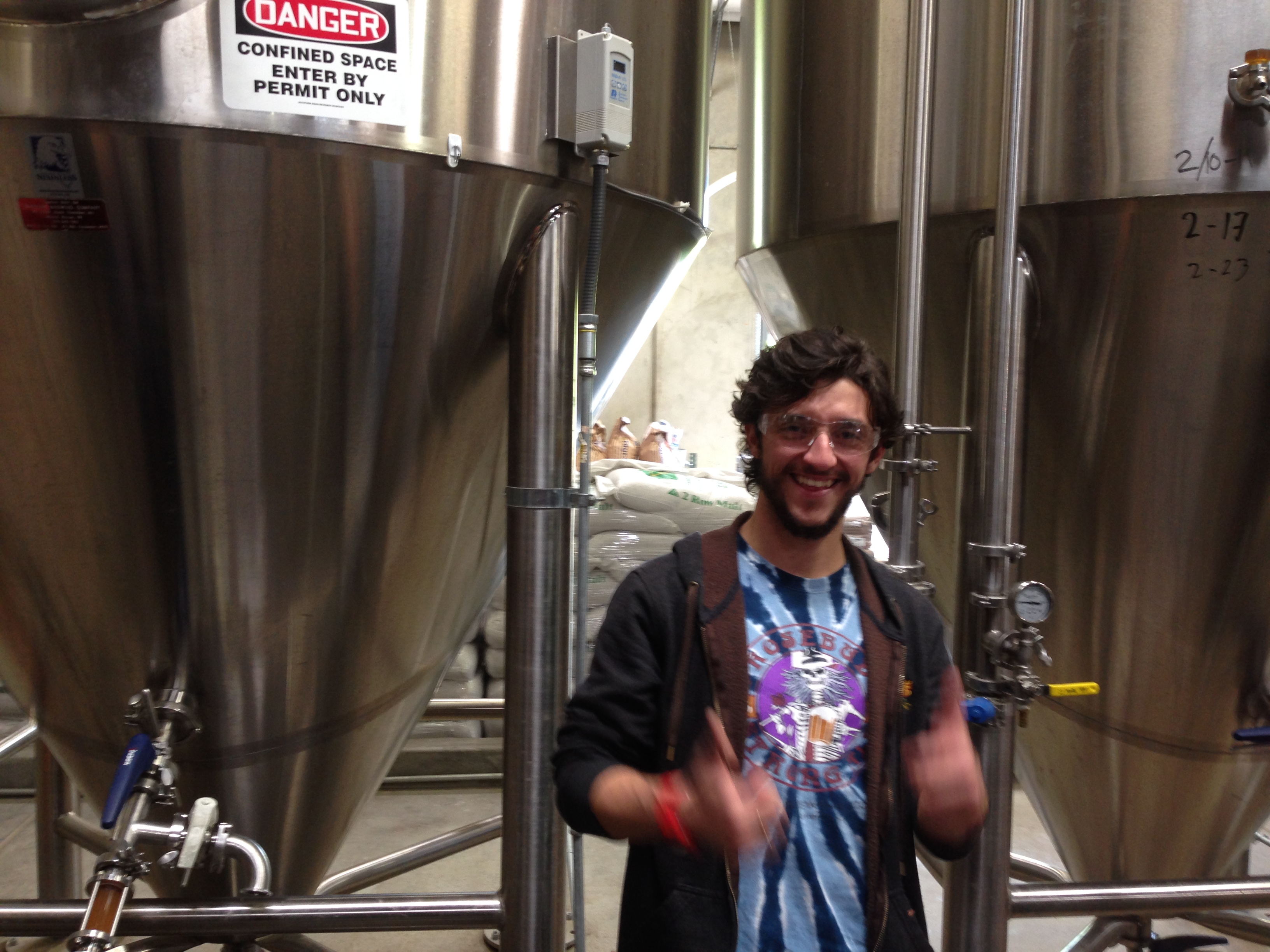
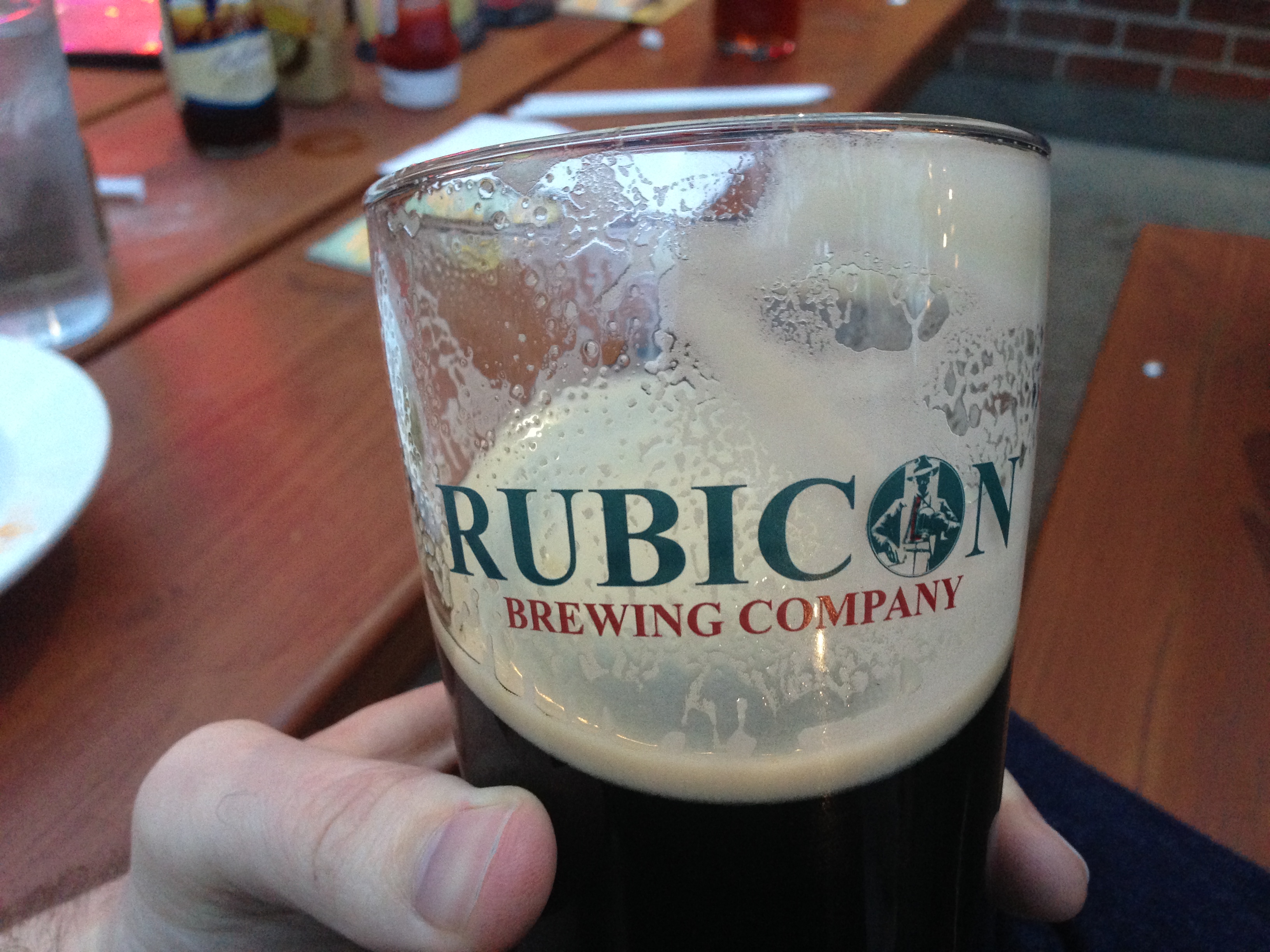
So much to write about since the last time. Most exciting of all was a pair of brewery tours. Monday after class we hit up Rubicon Brewing, first we went to their production facility in West Sacramento where they have an incredibly large warehouse with a new 30 barrel brewhouse and several very large fermenters, a few bright tanks and a couple small bottling lines. Our tour guide was Chris Keeton, a brewer at Rubicon and a classmate in the MBP. They have plans to expand and they definitely have the room to do it in this facility. We spoke for a while with Scott Cramlet, the brewmaster, about his thoughts on what to take away from the course depending on our goals in the industry. Next we travelled to downtown Sacramento to visit the Rubicon brew pub.  This is where the real fun of the evening took place.  We arrived on a day that Rubicon was releasing a few new brews, and Chris had a good deal of creative input in to them and it was nice to see him pumped about the evening.  The place was packed as I’m told it is every night; the crowd included a large number of regulars who are there very regularly.  We chatted with one guy who told us he once went a year and a half straight spending daily quality time at the pub.  It was cool to see Chris in his element as well, the regulars know him well and like to chat about the beer; you could tell he was loving it.

We ducked in to the back to visit the brewery, one that none other than Dr. Michael Lewis designed and installed back in the 80’s. After seeing the West Sac facility, this was a mini version, especially of the fermenters, which were custom made to fit in the 15’ high ceilings. Chris explained how he knows every single piece of equipment and how to treat it to get it to actually work. With such an old brewhouse there are many little quirks that come along with it.  But it was built to last and still kickin.

IMG_6107 IMG_6112

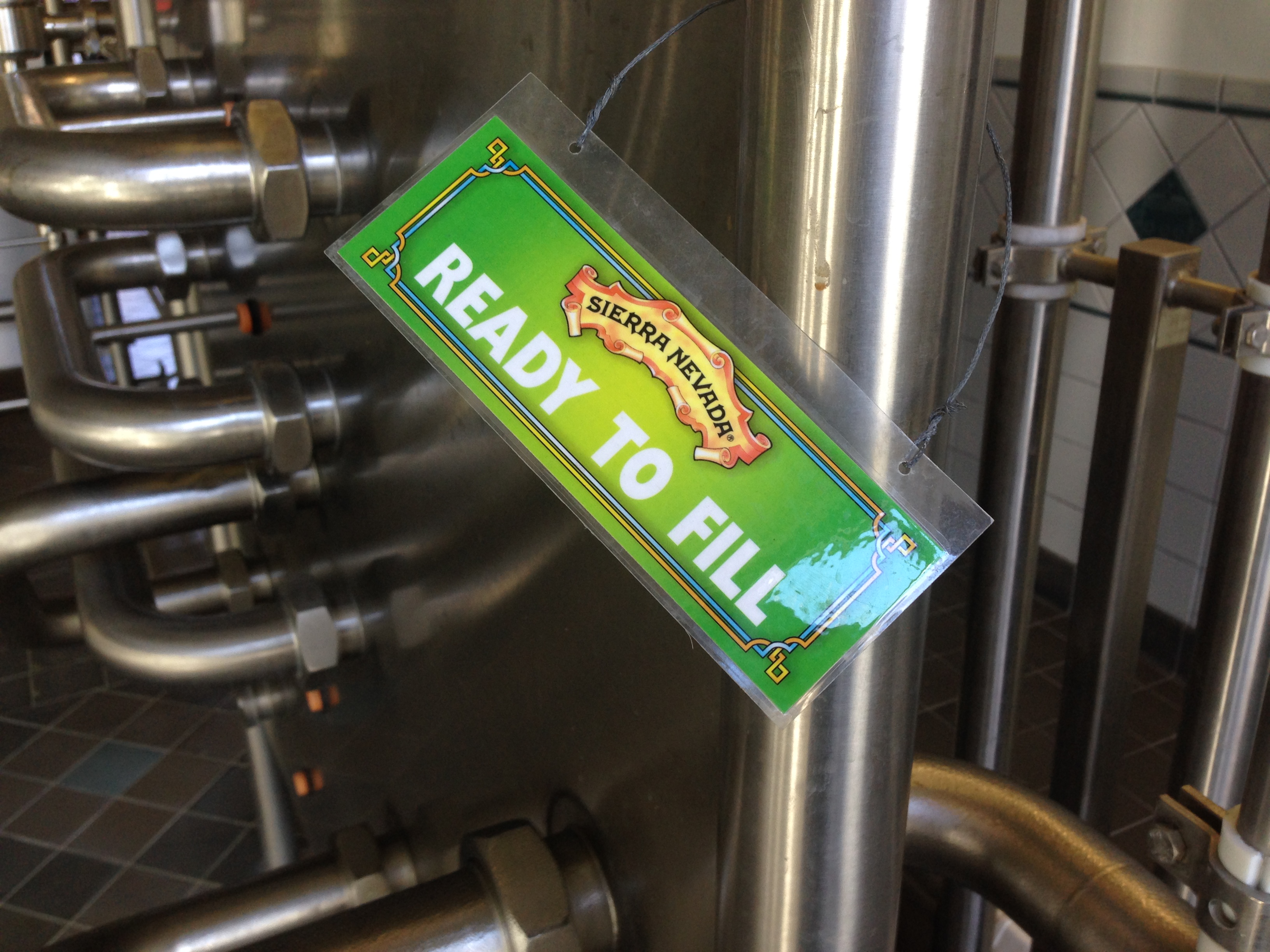
On Wednesday we received the treat of the course that everyone had circled in their calendars, Sierra Nevada brewery tour day! It was described by Dr. Lewis as “the most beautiful brewery on the planet” and it didn’t disappoint.  The place was massive and spotless, but was also done up to look great. The copper plating of their 200 barrel kettle and lauter tun, which is purely aesthetic, was done by 14 German copper smiths that Ken Grossman convinced to come out of retirement and fly half way across the world to complete.  We walked on what I can only describe as a sky walk (complete with Star Trek style automatic doors) and looked over the solar panel covered roofs and hydrogen fuel cells. They are somewhere around 75% energy self-sufficient at one of the largest breweries in the U.S. in an industry that is incredibly energy intensive.  I really like that they strive for this even though it wouldn’t normally make sense for a company to do it (I think the return on investment for the solar panels is something like 7 years, and more for the fuel cells).

IMG_6164

IMG_6198 IMG_6210

The bottling line was a thing of beauty. We’ve sat through 6 weeks of packaging lectures, but after seeing this room I finally have an appreciation for how complicated and delicate running an efficient bottling line is, and it is way more interesting when you can actually see it working than when you are reading about it or looking at a power point slide. It was nice to know what parts to look for though. The room was filled with super nerdy people (us) getting excited to see random little parts like the jetter (the little nozzle that creates a tiny bit of foam at the top of the bottle just before capping it to remove the last bit of oxygen). At one point a classmate yelled out “Hey Rod, look! Variable drives!!”. This room was also absolutely spotless, it was quite impressive. The highlight of the tour was walking in to the hop room where they break apart the 200 lb bales of whole cone hops that they use. As you can imagine the aroma was delightful. We did a few hop rubs and walked out with green sticky hands…a thing of beauty.  After the tour we headed to the pub for lunch and lots of beer courtesy of Sierra Nevada. We sat in the sun, shot the shit and sampled some fine beers…what else could we ask for? Best day of school in my life.

IMG_6194 IMG_6231

We are finished with the first module (barley to wort) and just began the second (wort to beer), while the third module (engineering and packaging) continues throughout Phase 1 of the course, which runs the first 11 weeks of the course and also includes sensory. This second module, which focuses mainly on yeast and fermentation is apparently the most difficult of the three and the exam that people have the most troubles on. I have a good amount of chemistry in my background but not too much biochem, meaning I am going to need to focus, something that may not be easy with constant free beer samples being dropped off (we just got 6 cases dropped off by Deschutes!) and the weather getting summery warm.  Luckily this portion of the course is really interesting to me and I am enjoying spending time on it. I’m not sure I would think that if the end product wasn’t beer, but it is, and that is great, because I love beer.

Update from week 5 of the MBP

The biggest development over the last week is that my wife Judith made it down to California and is now living with me in our tiny apartment.  This makes me extremely happy!  I picked her up in San Francisco on the weekend and we enjoyed some nice weather by going mountain biking east of Sacramento.  Every single thing I’ve been doing so far in Davis is somehow related to beer and it was nice to take a break from that on the weekend. Having Judith here will help me hang on to a little bit of my sanity.

People in the course are getting to know each other more now and I’m finding myself out of the house more often and exploring Davis a bit.  We discovered a $5 beer and pizza special at Vito’s for example and I’ve been there three times in the past week.  But spending more time on social activities means I need to make an extra effort to spend the time I need on the course. We’ve gotten through the first module of the course, which is everything from barley to wort, technology and biochemistry, and we’ve started to receive some feedback in the form of marked exams. I’m pretty happy with how I’ve done but know I can improve. As we review the material now I’m starting to read more broadly and it’s really sinking in.  That being said we haven’t done too much work yet on the past IBD exam questions, which are much more difficult than some of our short exams we are doing now.  The information we are cramming in at the moment is just the foundation and we’ll need to expand from there on the exams to pass.  Dr. Lewis gave a pretty serious talk to the class this morning basically explaining that if we don’t get the information we’re learning now, then the IBD exams will be damn near impossible, so we better stay on top of it.  I’ve had a habit in the past of cruising through courses and cramming for exams and doing just fine. I don’t think that approach will work here.  Lucky for me I am really enjoying what I’m learning so staying up on it is not too difficult.

In terms of what we’ve been learning it’s very practical stuff that applies directly to producing quality beer efficiently, and all of the operations we as brewers need to perform in the brewhouse.  During our last two weekend brew sessions we managed to up our brewhouse efficiency from about 75% to about 82% because we gained an appreciation of the processes that occur during lautering, for example.  A take away from the past couple of weeks is that many people believe different things about brewing processes and as a brewer you need to decide what you believe and why.  Mainly due to tradition brewers have many methods that have simply been inherited and I think it’s important to know what any given method brings or takes away from the beer.  Using a method simply because it is traditional is not necessarily a bad thing, but you might be wasting your time (ex. on an unnecessarily long rest), or you might be able to achieve your goal more effectively by introducing a simple change (ex. increasing fermentability with a slower temperature ramp).

One of the more exciting course-related developments is that I’m starting to pick up on the sensory component. Over the past three weeks we’ve been given standards for defects (a pill opened in to a control beer – Budweiser) and been given some time to try and get the aromas to stick in to our mind. Then we taste a variety of beers and try to identify the defects present.  There were a few beers where I was immediately able to detect defects, and this has carried on to the pub where I’ve noticed some off flavours in beers that I wouldn’t have noticed (and didn’t notice) a week or two ago.  So far I am confident detecting beer that is light struck, has elevated levels of acetaldehyde, diacetyl, isoamyl acetate (banana), phenolic, and DMS. This last one, DMS, I can’t always put my finger on, so I plan to grab a six-pack of Rolling Rock lager (which intentionally has high DMS levels) and drink it to lock that flavor in to my brain.  So far I’ve only seen it in 30 packs though, and I’m not sure I want it that locked in.  Other off-flavours, like isovaleric acid and oxidation flavours, I still need to work on.

Judith helped me bottle the Brown Ale we brewed a few weeks ago and its tasting fine! Soon we’ll have multiple varieties of homebrew at home and on tap in the classroom.  I can’t wait to start tasting it and thinking of ways to improve my brewing processes.  For example I could smell a faint hit of acetaldehyde from the yeast cake of the Brown Ale meaning I probably needed higher yeast pitching rates (luckily I couldn’t detect it in the beer).

Anyway, I’m glad to report that after 5 weeks I’m still engaged and enjoying the Master Brewers Program.  I think it is a worthwhile course for people who really want to know the science of brewing and who want to be able to make the highest quality beer. It feels like a good course for people who want to be responsible for important decisions in a brewery, including everything from raw materials, brewery design to recipe formulation, processes and packaging.  We’re also getting good insight in to the business side of things through guest speakers such as the owner of Rubicon Brewing in Sacramento and an Alcohol Control Board law expert.  Next week we have our fist brewery tour at Sierra Nevada in Chico.  I probably don’t need to tell you how pumped I am for that.

Brewing is balance

So much of brewing is about balance. To produce good malt barley must be germinated, but not too much, and dried, but not too much, in order to balance modification (production of enzymes and release of starch) and malting loss (the amount of energy lost to plant growth).  A balance of temperature and pH is needed in order allow enzymes to do their work in the mash.  Beta amylase kicks in to action to convert starches to maltose (the main fermentable sugar) at an optimum temperature of 62 to 65 C, but it cannot work effectively before alpha amylase does its thing to chop down the larger starch compounds in to something the beta amylases can easily handle.  But the alpha amylases work best at 70 to 75 C, but once you reach that temperature the beta guys start to get deactivated and no longer work.  So you need to compromise and hit a temperature where both the beta and alpha amylases work but not at their optimum, typically between 65 and 70.  Not too cold, not too hot.  Balance.

Parallels can be made to this course and I suspect to working in the brewing industry as a whole.  There is no one skill set that will set you apart as a brewer. Sure you need to make good beer. But to do that you need to understand what is happening scientifically, while having the mechanical and physical ability to make it happen, and without endangering those around you.  And you don’t just need to know how to make good beer, you need to work well with people and be able to think and act on the fly.  You need to be creative but have an appreciation for recreatablility.

With regards to the course, and therefore my life at the moment, balance is key in order to get as much as I can from my time here.  To me the course is not just about passing the IBD exams (although that is one major goal). It’s obviously about getting as prepared as possible for a career in the industry.  It’s about developing relationships with peers, professors and professional brewers that are not only enjoyable but will be valuable for the years ahead.  It’s about taking advantage of opportunities to brew on the pilot system at Sudwerk as well as with the random guy I met playing foosball on Saturday night.  It’s also about taking time to exercise and spend time with my wife when she gets here (in less than a week!).

The course is getting busier, which I mentioned last time. But it is also getting more difficult. The engineering component of the class is getting tough and the only way to get good at it is to practice doing problems. I’ve worked with pumps and piping systems before but just looking at some past exam questions I would not know where to begin.  Some of the problems are taking up to an hour to solve something that we’ll only have a half hour to solve during the exam. I’m not overly concerned, I just know I need to put the time in to get better. I’ve been slacking a bit on the packaging portion of the course because to be honest it’s a little dry.  So I’ll need to find a way to focus on that more effectively.

We did our second batch on the pilot system this weekend and I’m pretty excited about it.  We split the wort to three 5 gallon fermenters and pitched one as a lager and two as ales.  Light in colour and moderately hopped.  We’ll do some different dry hopping on the two ales, keep the lager and one of the ales consistent in that regard.  We had another great brewing crew out. One of our guys works as a brewer at Rubicon in Sacramento and he had some really good practical input, including how to effectively control a boil over, which was damn near close to happening.  Fingers crossed but it’s looking like I’ll be able to get on to the pilot system fairly regularly.  I’m a bit surprised that more people aren’t jumping on the opportunity but if that means more brewing for me I’ll take it.  Brewing is a huge priority while I’m here and I intend to keep on top of it.

It’s late, sleep is important to balance as well. Good night.

Some enzymes, proteins, starch and a dash of inspiration

What I really like about this course so far is the little tidbits of inspiration that are sprinkled upon us. Among the discussion on biochemistry, fluid flow and heat transfer we get a taste of what makes life long brewing professionals passionate about what they preach.  These guys are no bull-shitters and that adds a massive degree of value to the lectures.  They are not afraid to tell us what beer reminds them of “an angel weeping on your tongue”, or what beer they think is a waste of time “some Double Imperial IPA piece of shit”.  You know they mean it therefore when they come out with a statement like “without beer our society would not have been able to advance to where it is today”.

The meaning of that statement was explained to us as follows.  Beer has had the ability to break down social barriers and open lines of communication.  Highly people can talk to lowly people, lowly people can talk to the giants.  A level playing field upon which judgments are temporarily suspended can be created and people can develop an understanding of each other.  This promotes compassion for fellow human beings through a shared sense of euphoria.  This might sound a bit over the top but if you look at the history of brewing it’s not far off.  People have devoted their lives to brewing for millennia and the person who can make a beer that is recognized as having ‘good quality’ has always been a popular guy or gal.

But how is it that we are still churning out new beer styles and recipes all of the time?  What is viewed as ‘good quality’ is constantly changing, or being brought back to life. This brings us to the aspect of creativity in brewing.  But how can people keep creating different versions of something that has essentially four ingredients?  Everyone has heard that brewing is a combination of science and art.  There are many variables of brewing (and malting) that need to be understood.  The ranges of conditions in which a wide variety of enzymes can perform or be destroyed, the variety of base and specialty malts that add proteins, starches (and thus sugars and alcohol), flavour and colour, the endless variety of hops that can be combined and utilized under different conditions to provide bitterness, flavour and aroma.  Different yeast strains and what they need to in order to thrive.  Byproducts from fermentation, contamination or environmental exposure that can be viewed as negative or positive.  All of these aspects must be understood from a scientific point of view.  But once they are understood by the brewer they form a basis upon which there are virtually limitless possibilities for creation.  Or as Michael Lewis puts it, it forms the piano upon which we play our delicate tune (what’s more inspiring than that?).  I have worked as a scientist for almost a decade, but this added dimension of creativity is what I’ve been craving, and brewing has been an outlet for that.  The greatest thing is the more I learn, the more I fine tune my instrument. And the more I practice, the better I become at playing it.

Charlie Bamforth has a book called “Beer is Proof God Loves Us”.  The more I learn from these guys the more I’m starting to believe that statement.

First brew day in Davis

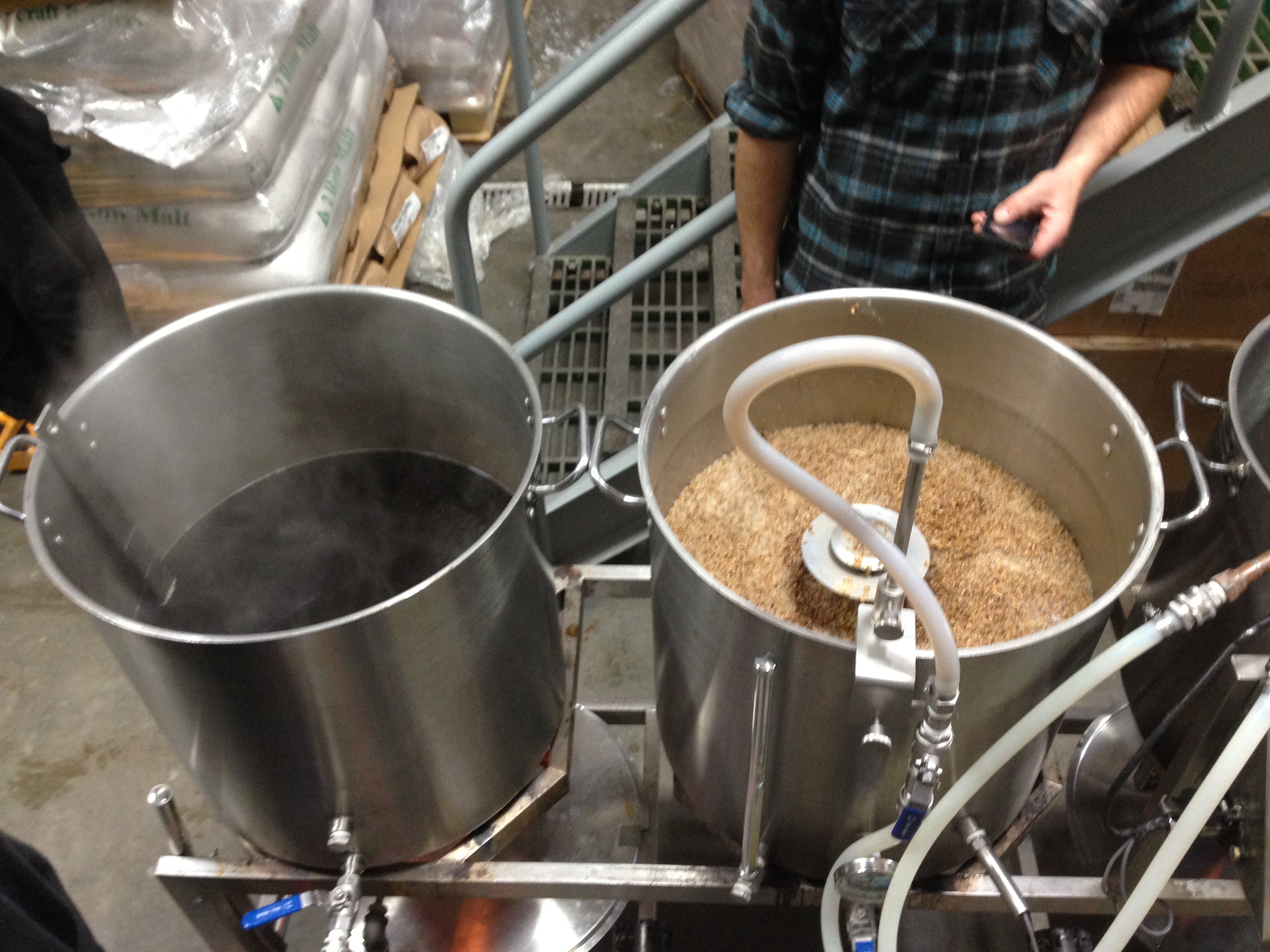
This past weekend I was lucky enough to brew with four talented and hilarious classmates, along with a Sudwerk Brewer and his energetic border collie.  We brewed an Americal Brown Ale on Sudwerk’s B3 Brew Sculpture.  Before brew day we were tasked with doing all of our calculations by hand.  I spent way more time than I had planned on these calculations but I’m glad I did because it really gave me a good feel for where all of the numbers come from. A couple of years ago my brother gave me a copy of Brad Simth’s Beersmith software and I’ve been using it ever since to formulate recipes.  Doing the manual calculations gave me a good idea of the equations that go in to that software and the assumptions that are made. We began by choosing a desired ABV of 5.5% and choosing our grain bill. From that we worked backwards to work out our starting gravity, weight extract required, grain weight, estimated wort colour, amount hops for desired IBU, mash volume for desired water/grist ratio, sparge water volume, temperature for strike and sparge water, pre-boil and post boil volumes, evaporation losses, etc, etc.  The great thing about this system was being able to do a step mash in order to make our β-and α-amylase enzymes happy.  We opted for a 62-67-70 deg Celcius mash at 10-40-10 minutes, respectively, in order to promote a dextrine rich malt character to our beer. We were able to hit our temps, gravity and volumes spot on, probably the first time I’ve brewed with such accuracy.  After brewing just once on this system it’s going to be difficult going back to my mish-mash homebrew system that I brought down here (but I will). I can’t wait to have a permanent place to live just so I can start building something like this.

IMG_5930IMG_5955

Brew day was also a ton of fun, as they always are.  Burgers were on the grill and we sampled some more great Sudwerk beer (great German style pils).  Dr. Lewis showed up and hung out for a little while, looked over our calculations then told us he didn’t have time for this nonsense (can I say I brewed with Michael Lewis now?).  Apparently I really sound “Canadian” when I brew too; must be all the excitement.  Our beer ended up being named the Fuckin’ ‘eh Brown Ale.

Besides brew day the course is getting busier. Lots and lots of readings that I struggle to keep up with. I’m feeling fairly confident with my understanding of the material, I just need to put the time in to it (i.e. must avoid laziness).  I’m realizing I’m fortunate to come from an engineering-oriented background, especially one that involves hydraulics.  My previous career choices had nothing to do with brewing but somehow they seem to complement it, at least so far.  I guess I lucked out on that.

We had our first sensory science session on Friday with Sue Langstaff. She is very talented at what she does, which is explain sensory science and try to help people describe what they are tasting.  For me this is going to be one of the most difficult parts of the course.  I have no previous training in this area and as Sue explained it’s not in our nature to be able to describe tastes and smells.  We are really good at describing things we see and hear, but taste and smell is processed in a different part of the brain.  What you taste and smell is really just a perception, it’s how your brain interprets the molecules entering your face and your brain can play tricks on you.  A bunch of us practiced tasting again tonight after class (below; such a hard life) with a fellow student who has been through BJCP training.  There were about eight of us standing around tasting the same beers and at one side of the circle we’d come up with totally different tasting notes than the people at the other side of the circle.  I think it’s really going to come down to getting to know certain terms to describe the tastes and aroma of different aspects of the beer (malt, hops, mouthfeel, etc.) and then going through them in your mind and deciding if you’re picking any of them up.  Anyway I’m a long way away from feeling confident describing what I ‘m tasting.  Good thing there are several weeks of training to come, along with many more great beers to be tasted.

IMG_5978

My life has pretty much been all school right now.  I’ve been to my apartment and the brewery and back and forth and not much else.  I’m living the dream.

First few days of the MBP

Today was the third day of the course and I’m finally getting around to writing a bit about it. The first thing I noticed when I walked in the room (above the Sudwerk Brewery) for the first time was a diverse group of people, all of whom looked just as stoked as me. As I walked around to find an empty seat people stuck out their hands and introduced themselves and it kind of reminded me of meeting a new person that’s going to be joining your group just before you head out skiing or snowboarding.  By this I mean you shake hands and the looks on both of your faces says nothing but ‘man am I excited for what we’re about to do’. Actually as I write this I can’t get that look off of my face, it’s that familiar tingling feeling that makes all of the hard work in life worth it.

A little after finding a seat the professors came in to the room and introduced themselves. In attendance we had the great pleasure of Dr. Michael Lewis, Dr. Charlie Bamforth (emphasis on B.A.M.F.), Steven Presley and Dr. James Brown.  I think that these guys could feel the buzz of the crowd and I do believe they were genuinely happy to be with us.  After all, this is a group of people that have travelled from far and wide, put their lives on hold and have been waiting for up to four years on a waitlist, all to be here for what promises to be a great learning experience and a great time in our lives. You could tell that everyone in the room wanted to be exactly where they were. And so it began.

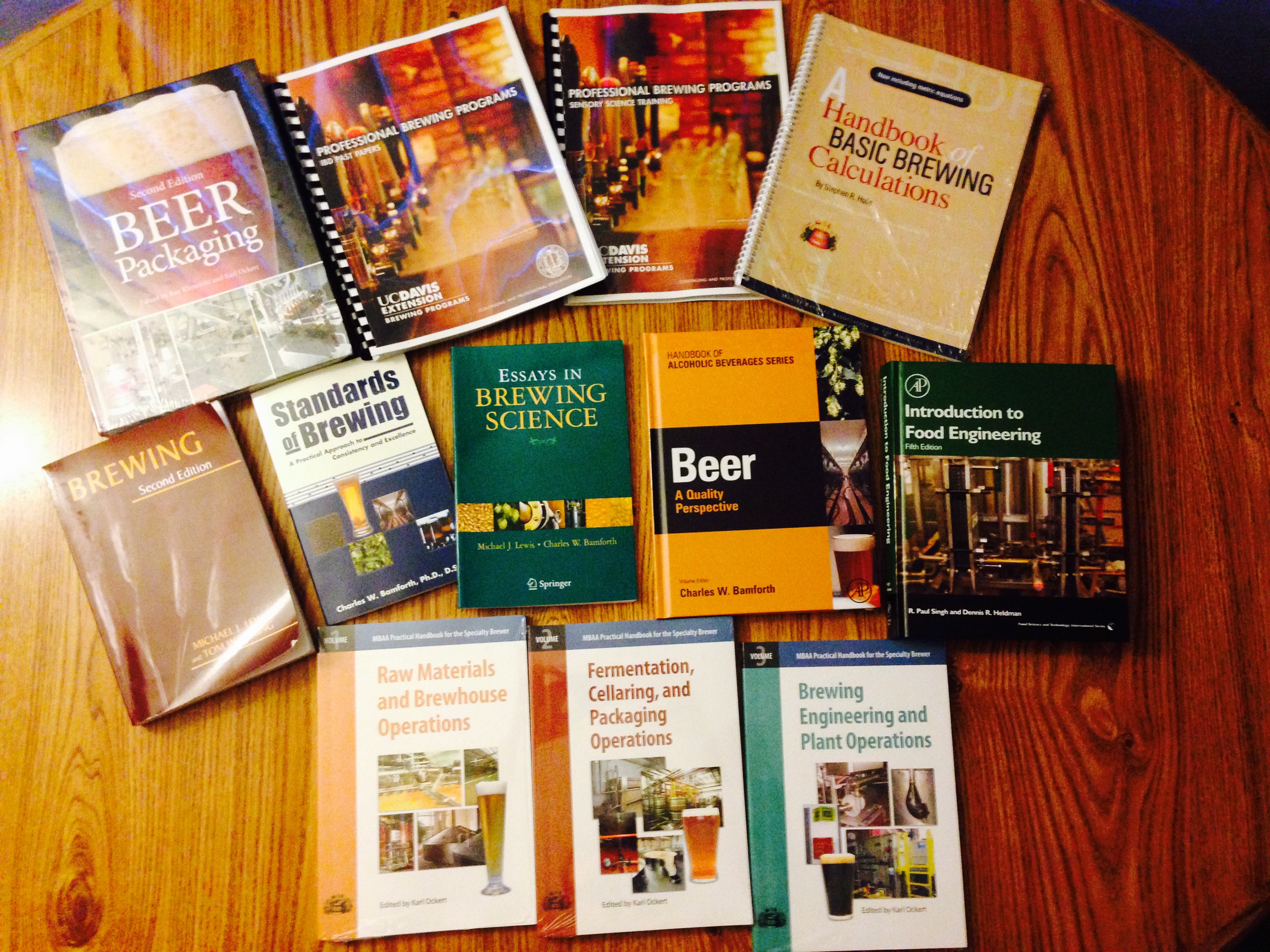
Oh yeah, the other thing I noticed once I sat down was the giant pile of textbooks sitting on the table for each of us to bring home, the photo below shows most of them.  This was a bit intimidating but its more just pretty great to get all of these resources. My brewing book collection was immediately tripled on Monday. The morning consisted of the profs sharing a bit of insight in to the class and the profession of brewing. As Dr. Lewis put it “to be a brewer is the best profession on this planet”. This was followed by “You do not become a thinking brewer without bringing every ounce of talent to the table”.  Both of these statements made me super happy.  It’s been my gut feeling for a while now that being a brewer would be the best profession in the world, at least for me. I’ve already touched on why I think that is and it is excellent to be surrounded by people who feel the same way, especially those who have lived it for many decades. I’m also excited to bring my best efforts to the table and become a thinking brewer, not just a guy that makes beer.

TextBooks

It was one other quote from Dr. Lewis that stuck with me the most though; “by choosing a life as a brewer you are choosing a life of sobriety”.  This was a bit unexpected I have to admit but makes more sense the more I think about it.  He noted that a brewer has to be able to drink an enormous amount of beer without getting drunk.  We are the stalwarts of the industry and we must represent it properly.  We will have an unlimited supply of free beer while in this class (we just polished off our first 5 gal keg supplied in the back of the class), yet we will be expected to, and need to, practice enough self control to be able to head home at the end of the day, finish our readings and be prepared for class.  It’s apparent that someone who abuses this privilege could quickly develop a reputation as someone who cannot control themselves sufficiently so why would you ever hire them to take care of a brewery? So here is an aspect of brewing I hadn’t previously thought of much. Perhaps because my brewing and professional life have always been separated enough that I never felt the need to drink much while working. But we will be around beer and be sampling beer (not to mention the necessary social beer) almost every day of our careers.  Luckily I don’t think this will be a problem for me, but it’s something I need to be mindful of.  Since I’ve been homebrewing I think I actually drink less beer volume wise (but more varieties and much better quality overall).  So it’s about knowing your limits and having self control while still being able to consume at a responsible level, not an easy task for everyone.  Anyway, Dr. Lewis apologized about this “downer” but I’m glad he mentioned it.

Anyway, back to the course. We had beers with all of our fellow students and a bunch of the great people working at Sudwerk on Monday afternoon.  Then on Tuesday we were treated to some great photos that Dr. Lewis had taken over his career and travels, along with an overview of the first half of the course. We then got a tour of the Sudwerk brewery Tuesday afternoon. These guys specialize in all kinds of lagers, from a classic German style pilsner that really hits the mark to a Marzen to a 9% ABV DIPL (double India Pale Lager) that is very hop forward and delicious.  They’ve got a 15 barrel brewhouse installed in the restaurant that’s been there since the late 80’s complete with open fermenters, and a larger 60 barrel brewhouse in the main part of the building that is more automated.  Being lager brewers they have a large cold cellar with several conditioning tanks.  It was nice to get the tour and it’s really nice to walk through the brewery every day and get to know the people who work there.

Today we had our first lecture from Charlie “B.A.M.F.” Bamforth.  We reviewed brewing chemistry and he is a delightful man to listen to.  He keeps things interesting and I suggest checking out some of his filmed lectures on you tube to see what I mean.  This weekend I’m signed up, along with four other students, to brew on Sudwerk’s 75 L pilot system. It looks like we’re going to have a bit more control than a typical homebrew setup and we’re all meeting up tomorrow to go over our recipe and do all of our calculations for the brew.  Looks like we’re collaborating on a brown ale recipe. It’s been way too long since I’ve brewed and I’m getting really stoked to get back to it.  Okay, need to do a whole lot of reading now, hopefully I can keep up with writing this semi-regularly.

A journey to get here

Well tomorrow is the first day of the course and it’s been quite a journey to get here.  Before leaving Vancouver last week we packed up our place and put everything in storage. I’ve got to say I thought I would be a bit more emotional about that. I always get a bit emotional when I move (and I move a lot because Vancouver housing is a pain in the ass), but this time it really feels right. I think maybe that’s because I’m finally following my gut on something and doing what I know will make me happy. I haven’t always made choices that way in the past; I’ve maybe been a bit too practical and cautious.

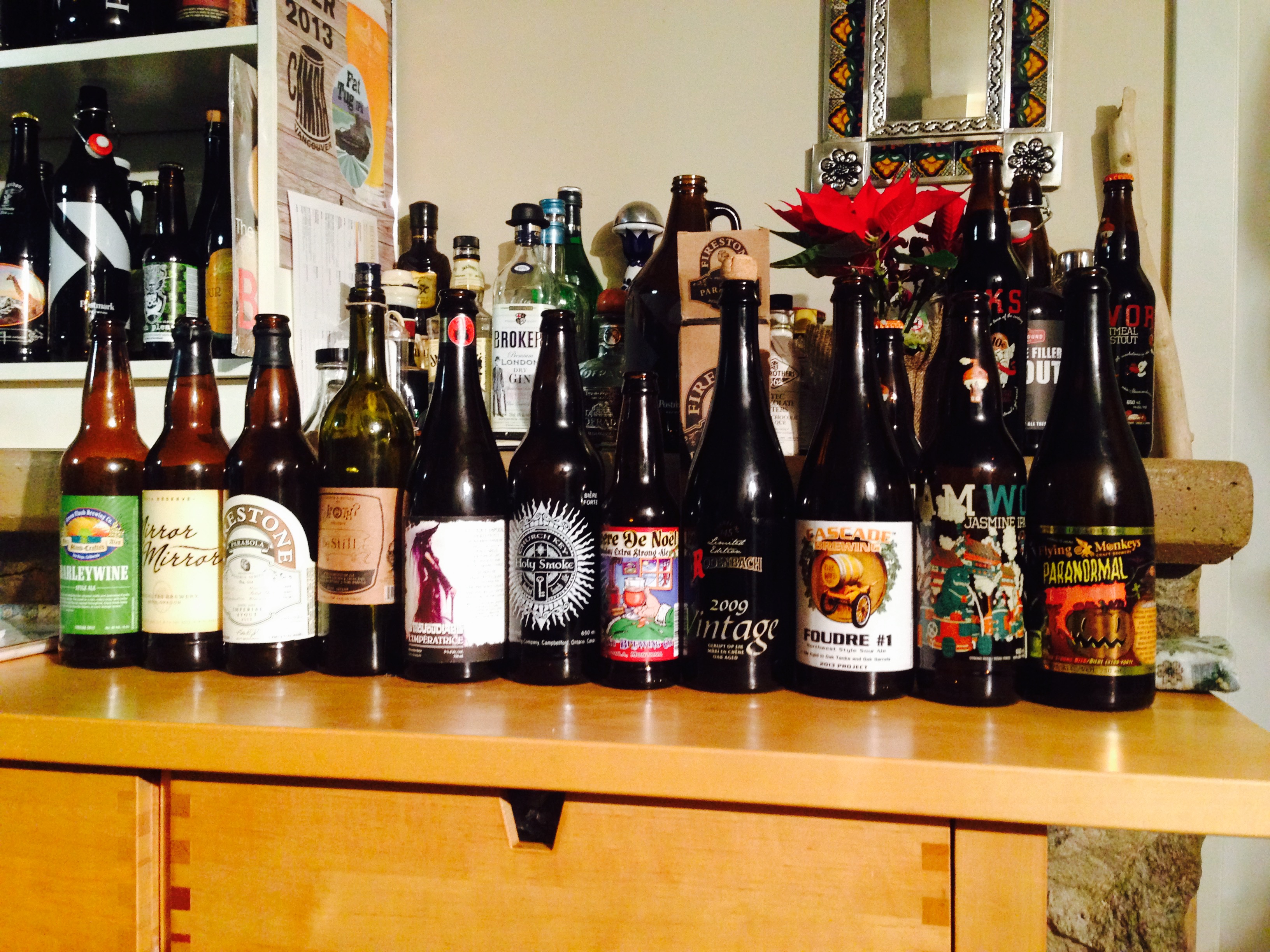
On the Friday before departure I joined Evan (of Doans Craft Breing Co…so close to opening!), m y brewing buddy Doug, I met Joel (who works at 33 Acres and makes an incredible pickled pineapple), Alex (works with Evan), and Rod (a brewer at Steamworks) for a beer tasting evening at Evans apartment.  We sampled some big sours, imperial stouts and barley wines that we’ve been saving for a special occasion. We didn’t really have a special occasion so we just got together and made one up. You can probably tell by the photo below that it was a tasty evening.

bottles

The next day, my brain a bit foggy and still trying to pack our lives away in to our CRV, my wife threw me a surprise party. I was sincerely and utterly surprised. I was expecting to go to a friends’ place for a quite dinner and walked in to a house full of about 40 of my closest friends from Van. I was touched and humbled by this experience and it meant a hell of a lot to have all of my good friends there to wish me luck on my journey to California.  I think they all feel the same as I do, that me changing careers to become a brewer just fits my personality.  The party was a “beer pot luck” so to speak and everyone showed up with a huge selection of great beers. I think I was quadruple fisting at one point.  I’m going to miss all the lovely Vancouver folks when I’m away, and I hope some come to visit.  My wife also commissioned our good friend Brad to make me a set of tap handles (also to my surprise) and Brad presented these to me at the party (which was also at his house). Brad has his own woodworking business called Re-form and Design and is a super talented artist; I suggest looking him up if ever in need of a creative design or artwork for a brewery or other business.

Taps

So with a really foggy brain, a storage locker full and various boxes, plants and furniture strewn about Vancouver we tried to sleep off our hangovers and then hit the road. With amazement, we fit everything we wanted in our car, made it across the border without any major hiccups and began cruising down the I5. We stayed one night in Eugene (no time to hit up any breweries this time unfortunately) and then rolled on in to Davis. We set up our small but cozy apartment over the weekend and we spent today walking around San Francisco before I had to drop my wife off at the airport.  Judith is heading back to Van to finish up some work and will join me again close to the end of February. So I’m on my own for a little while. Hopefully I can get in to a routine, gather the few pieces of brewing equipment I couldn’t bring with me, brew a couple of batches and really sink my teeth in to this course.

Tomorrow we meet the professors and brewmasters that we will be fortunate enough to learn from and get to know.  This includes some really exciting people who have vast amounts of knowledge about brewing and brewing science and includes, but is not limited to Michael Lewis, Charlie Bamforth, Tim Marbach, Steven Presley, Tom Shellhammer, Susan Langstaff, James Brown, Michael Vasquez and Mike Hutson.  I feel really lucky to be in the presence of these people and cannot wait to pour everything I have in to learning from them.  I really need to make the most of this opportunity because it is truly once in a lifetime.

But right now it’s getting late and I still need to review the first couple of chapters from my text yet again. Until next time, when I will hopefully have a bit more insight in to the course.

Getting close to the course

It’s now mid-January and I am getting close to finishing up my consulting job in Vancouver, we’ve found a place to live in Davis and are packing up our apartment.  My kegs are empty, brewing equipment is packed up (it’s coming with me) and my beer fridge is on loan to a friend.  It’s been difficult to stay focused on work and not look ahead to California.  I really should have tried to leave my job a week earlier but they need me this week and I can’t let them down, they are awesome people and they have been incredibly supportive. I really can’t wait to deliver a keg of beer to them, a commercially available one that I helped brew.  I’m now seeing the light at the end of the tunnel though and the excitement is helping me get through the long to-do list I have in front of me.

Since I returned from our trip to the U.S. I’ve made a point to visit Vancouver breweries when I can, taste their beers and get a gauge on what’s happening in my neighborhood. Strangefellow’s Brewery opened just a few weeks ago and I’m pretty excited about that. They have a large display of barrels in which I am told they will be aging a variety of sour beers.  I have heard that a few of the local breweries are getting together to produce a map of East Van breweries (Yeast Van), similar to what I followed when I was down in Bend.  There are so many breweries in planning I can’t mention them all, but I am extremely excited to see the industry keep developing. I was lucky enough to meet Evan Doan of the soon-to-open Doan’s Craft Brewing Co. through a mutual friend and he was awesome enough to invite me in to his brewery (located in Powell St. Brewing’s former location on Powell St.), share a few of his brews and show me the new equipment that recently arrived. I’m a bit sad that I won’t be around when DCBC opens its doors (mid-February) but that will be one of the first places I head on my return to Vancouver.  Seriously, Evan is this close to opening up and he still took the time to chat with me on a couple different occasions and give me some insight in to what I am jumping in to. I’m wishing the best of luck to him and his brother.

I’ve developed a bit of a loose ‘plan’ for when I get back to BC (assuming that’s what happens, who knows).  I’ll be brewing as much as I can down in California but I won’t be able to get my homebrew across the border.  So my plan is to perfect (as much as that’s possible) four to six beers that project what I value about beer (quality, creativity, relevance, my go-to styles etc.).  After my exams in June I’ll fly back to Vancouver, brew them up over a week or two with the help of some of my regular brewing buddies, then fly back to California to go camping and biking with my wife (we have our place until the end of August so why not, and I have no plans of applying to breweries without samples of my brew). I’ll need to trust transferring my beers to friends, and likely borrow some secondaries along the way. Then I can return to Vancouver, dry-hop if necessary and bottle them up.  Once they are ready and I’m happy with them I plan to apply for work at some of the local breweries in Van and on the island (and lots of other places I can deliver some of my goods).  At least this sounds good at the moment, things are likely to change and other opportunities may arise in the meantime.

Speaking of opportunities, I plan to keep my ears and mind open to all that may cross my plate.  Right now I plan to return to Vancouver but there’s nothing that I need to come back here for. My ties are my friends and the community that got me closer to my passion.  Obviously a new location would also need to work for my wife, who works in public health.  I am extremely thankful for her. She has encouraged me to follow this dream and give it a shot, even if it doesn’t end up as planned.  We are very much on the same wavelength and she is looking forward to exploring new volunteering opportunities while we are down in the US as she maintains ties to her work here in BC.

So next week we load up Bruce (our car) and drive down to Davis.  I kind of can’t believe this is real, but it becomes more real every day and it’s about to begin.  I’m looking forward to starting this course.

The Pilgrimage

My wife and I, God bless her soul seriously, decided to take a road trip to the US for our honeymoon. During this road trip we stopped in a handful of places in Oregon and we visited Davis California, our future temporary home. I won’t get in to the details of our honeymoon, but I will elaborate on some beer related insights, which I’m sure many are familiar with. First, I was blown away by the sophistication of the breweries I visited, the quality and variety of the beers they had on tap and the sheer number of breweries I came across. We only had a day and a half in Portland and a couple of days in Bend, and there were a lot of other things we wanted to do then visit breweries. But still we got to visit Breakside, Rouge, Cascade, Hopworks, Lompoc, Deschutes (Bend and Portland), Crux, Boneyard and McMenamins. We wanted to keep going but our beer bellies told us we needed to go snowshoeing instead.  But wow, what a list and just scratching the surface.

Breakside was a must visit for me ever since I tried their Wanderlust IPA at Alibi Room. Their idea of an IPA is everything I like about the style: very floural, decently bitter (not over the top), clean and refreshing, moderately strong (6 to 7% ABV), light in colour. No wonder they brought home two top three medals from the GABF for their IPAs. I have to mention Cascade because it truly blew my mind. I have had sour beers here and there and have usually enjoyed them. But it wasn’t until we visited Cascade that I really came to appreciate them. We tasted at least eight of their sours and the two that stood out were their Foudre #1 and Manhattan NW. I really came to appreciate the complexity of these beers and just what is possible with sour beers in general. My wife also declared that sour beers were her favourite style, which comes as no surprise as she has impeccable taste in wine. Figures though that she would choose the most expensive style as her favourite, as the two 750 ml bottles we picked up were $25 and $35 each.

Our short visit to Boneyard Brewing gave me a lot of encouragement for the industry as a whole. As I understand it they began about four years ago on a 20 barrel system. They do not sell bottles or cans, just growler fills and kegs to restaurants. And in a city of 80,000 and 19 Breweries and counting they are planning to expand with another 40 barrel system. Of course their beer is top notch, they have good branding and a cult following, which doesn’t hurt.

We also spent a few hours at Sudwerk in Davis, a place where I will be spending many more hours in the near future.  I got a really good vibe as a customer at Sudwerk. We first hit the back alley ‘tasting room’ consisting of a garage door and picnic tables set out beside the freeway. Then we checked out the brewpub with part of its 15-barrel Caspary brewhouse in the centre of the bar. I had a great time chatting with Chi, one of the locals who admitted he was “there pretty much every day” and enjoys his half pale ale, half pilsner mix, which I nicknamed Chi.P.A. (he seemed to like that better than simply the Chi-special). Seriously this pub reminds me of places my Dad would frequent when I was younger and where I’d pick him up and drop him off once I got my drivers license, always taking the time to see how all the good ol boys are doing.

We also visited a few beer bars in town, University of Beer, Davis Beer Shoppe, and Burgers and Brew. Let me tell you, the people that frequent these places are really excited, and really knowledgeable about beer. When we rolled in to UofB the bar tender told me “man, we have Pliny on tap, everyone is really excited around here”. It helps that UC Davis has a 4 year program and a 2-year Masters program focused on fermentation and brewing, and of course the Extension courses including the MBP I’ll be attending very soon. I have to say I was really excited and a bit intimidated all at once. Oh man, am I ever getting excited…

After Bend we high tailed it back to Canada but headed a bit east and ended up in Nelson, BC for a few days of relaxation and no driving. We hit the slopes on our snowboards at Whitewater and had some of NBC’s Wild Organic Honey Ale between runs at the pub. NBC’s beer is featured in every pub we visited (we did a bit too much drinking over the holidays) and people in town seemed to be pretty loyal to their home town brew. We visited Torchlight, the second brewery in town. It’s nano and was started by two homebrewer buddies, we also found their beer on tap at a couple other pubs. The brewer I spoke to told me that people were excited to have a new brewery in town and that NBC was super supportive, offered to help in any way they could and looked forward to a collaboration brew with them.

Oh man, am I ever getting excited…